Cybersecurity is evolving rapidly, and businesses must keep up with the latest threats to stay protected. From AI-powered phishing and deepfake scams to ransomware, cloud attacks, and identity compromise, this year is bringing a new wave of cyber risks. In this article, we explore the top cybersecurity trends every business should watch.
1. AI-Powered Cyber Attacks Are Rising
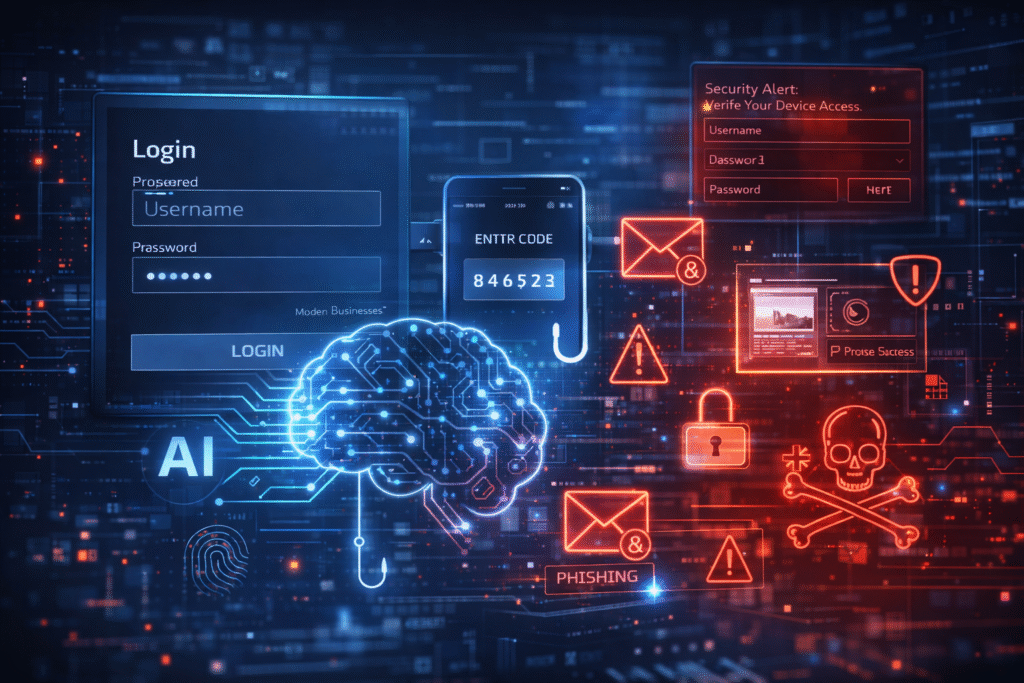
Artificial intelligence is now being used by attackers to automate phishing, improve social engineering, and speed up intrusion activity. Businesses should expect more convincing phishing emails, smarter scams, and faster attack execution. Security awareness training and AI-assisted defense tools are becoming essential.
2. Identity Has Become the New Security Perimeter
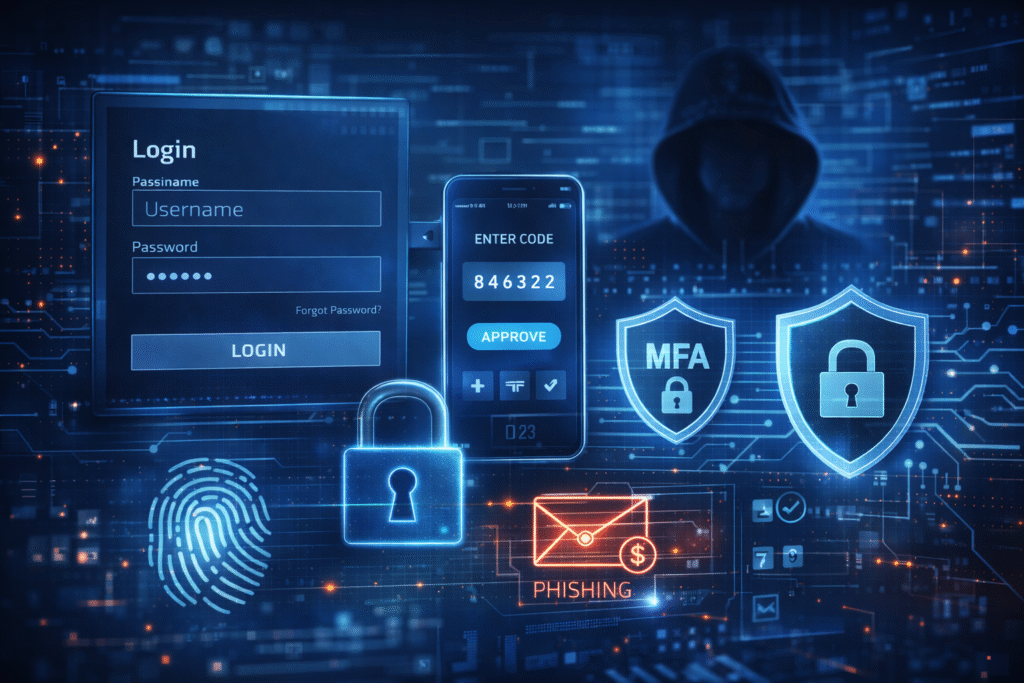
Attackers are increasingly focusing on stolen credentials, account takeovers, MFA abuse, and session hijacking instead of relying only on traditional malware. Protecting usernames, passwords, sessions, and privileged accounts is now just as important as protecting devices and networks.
3. Deepfake and AI-Driven Fraud Are Becoming a Serious Business Risk
Deepfake scams, synthetic identities, and AI-generated impersonation are growing quickly. Finance teams, HR departments, and executives are increasingly exposed to fake voice calls, fake video messages, and impersonation attempts. Verification processes should never rely on voice or video alone.
4. Ransomware Is Still Evolving

Ransomware remains one of the biggest threats to organizations, but the tactics are changing. Attackers are increasingly using data theft, double extortion, credential abuse, and human-operated attacks rather than simple file encryption alone. Businesses need backups, incident response planning, access control, endpoint visibility, and rapid threat detection.
5. Cloud and Public-Facing Systems Are Under More Pressure
As more businesses move to cloud platforms and web-connected applications, attackers are taking advantage of misconfigurations, exposed services, weak identity controls, and vulnerable public-facing apps. Cloud security cannot be treated as a one-time setup. Continuous monitoring, secure configuration, access reviews, and vulnerability management are now necessary.
6. Geopolitical Tensions Are Increasing Cyber Risk
Cybersecurity is no longer only an IT issue. It is now connected to geopolitics, supply chain disruption, national security, and economic instability. Even organizations that are not direct targets can be affected through suppliers, software dependencies, infrastructure providers, or regional instability.
How Businesses Can Respond
- Strengthen identity and access management
- Train employees to detect phishing and social engineering
- Secure cloud environments and public-facing applications
- Build and test incident response plans
- Use threat detection and monitoring tools
- Review third-party and supply chain risk regularly
Conclusion
The cybersecurity landscape is being shaped by AI, identity attacks, ransomware evolution, cloud exposure, deepfake fraud, and geopolitical instability. Businesses that understand these trends early will be in a far better position to reduce risk and protect their operations. The threat environment is changing, but with the right strategy, awareness, and security controls, companies can stay prepared.